
The Future of Compliance Monitoring
Discover how financial institutions can modernise compliance monitoring with data-driven insights, cultural change, and smarter tooling and why regulators expect nothing less.
Download White Paper Back
Back
GRC Solutions
Back
GRC Platform
Back
Resources & Insights

On Demand
Compliance monitoring programmes often demonstrate activity. Regulators are looking for effectiveness.
In 2026, the UK supervisory environment has shifted:
If your monitoring plan looks similar to three years ago, it may not survive your next supervisory review.
Our webinar examines how asset managers, banks and wealth managers can modernise compliance monitoring to withstand supervisory scrutiny.
Scroll down to read the full agenda.

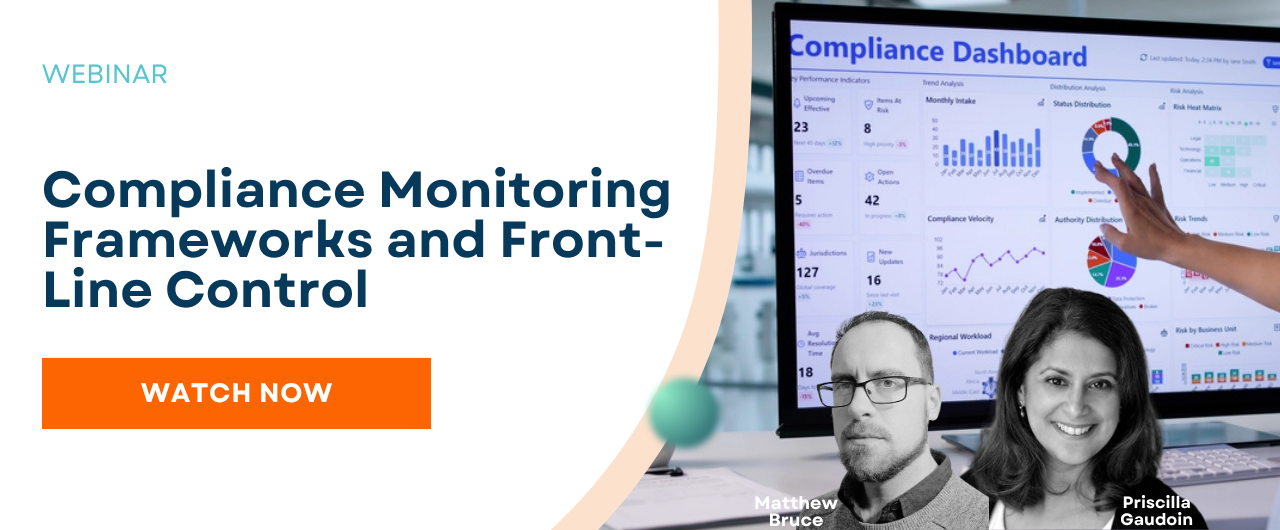
Join asset managers, banks and wealth managers to see how to modernise compliance monitoring to withstand supervisory scrutiny.

Regulators view of monitoring effectiveness
Sector-specific pressure points across asset management, banking and wealth management
Common weaknesses in monitoring frameworks
What ‘good’ looks like in today’s supervisory environment
Practical steps to strengthen oversight and board reporting
Your Expert Panel

Head of Risk & Compliance

Platform Director
This session will explore what effective compliance monitoring looks like in today’s UK supervisory environment and why many existing programmes may no longer meet regulatory expectations. We’ll examine the regulator’s perspective on monitoring effectiveness, highlight sector-specific pressure points across asset management, banking and wealth management, and uncover common weaknesses seen in monitoring frameworks.
Most importantly, we’ll share practical steps to strengthen oversight, improve board reporting, and build a risk-driven, data-enabled monitoring approach that can stand up to supervisory scrutiny.
If you’re a Head of Compliance, Monitoring Officer, MLRO or Risk Leader, this session will provide actionable insights.


Head of Risk & Compliance
Priscilla is a former consultant, CCO and MLRO, experienced in providing regulatory oversight and advice to firms across the financial services industry. She is responsible for our thought leadership programme, writing regular articles and white papers, and hosting webinars on a variety of regulatory matters.
Her dual role also encompasses the oversight of risk management at Ruleguard.
She is a Fellow of the International Compliance Association, a certified GRC practitioner, and a member of the Institute of Risk Management.
Platform Director
Matthew is our Platform Director and leads the development roadmap for the Ruleguard platform. He has 15+ years of experience in software development and has worked on Ruleguard since its launch.
Matthew plays a key role in delivering a programme of features and improvements that continue to delight users and deliver tangible business value. He’s passionate about product management that balances strategic and tactical objectives.
Continue Your Journey: Deepen Your Compliance Monitoring Strategy
Discover how financial institutions can modernise compliance monitoring with data-driven insights, cultural change, and smarter tooling and why regulators expect nothing less.
Download White Paper.png?width=715&height=300&name=webinar%20featured%20image%20April%2025%20-%20Avoid%20the%20pitfalls%20proactive%20compliance%20monitoring%20v1%20large%20(2).png)
In this webinar, Ruleguard explores some of the common pitfalls of compliance monitoring; and provides insights on how to strengthen your monitoring processes for better compliance outcomes.
Read blog
Download our free infographic to see where firms struggle the most, from tech gaps to vendor oversight and read our analysis on the survey results.
View Infographic