

Operational Resilience
AI-powered operational resilience, from important business services to impact tolerances and board-ready evidence. Under the FCA and PRA operational resilience framework, firms must identify their important business services, set impact tolerances, map the people, processes, systems, and third parties behind them, and prove through scenario testing that they can stay within tolerance during severe-but-plausible disruption. Ruleguard turns that from a periodic mapping project into a living programme, agents maintain the service map, track testing and remediation, and keep the evidence current for your board and your regulator.
TRUSTED BY LEADING FINANCIAL INSTITUTIONS








The Challenge
Resilience is a living state, not a one-off mapping exercise
The FCA and PRA expect firms to remain within impact tolerances for their important business services through severe-but-plausible scenarios and to review and re-test as the business changes. Yet most firms capture their service maps, dependencies, and self-assessment in spreadsheets and documents that are accurate on the day they're signed off and out of date soon after. When a system changes, a supplier is added, or a scenario is tested, the picture has to be rebuilt by hand.

Static service maps
Important business services and their underlying processes, systems, people, and third-party dependencies are mapped once and rarely kept current as the business evolves
Learn More

Disconnected impact tolerances
Tolerances, scenario tests, and vulnerabilities live in separate documents, making it hard to show whether the firm can actually stay within tolerance today
Learn More

Manual chasing and remediation
Assessments, testing actions, and remediation of vulnerabilities are tracked over email and spreadsheets, with overdue items easy to lose
Learn More

Fragmented evidence
Dependency data, test results, incidents, and remediation sit in different systems, so assembling a defensible self-assessment for the board or regulator is a manual effort
Learn More
The Solution
A living operational resilience programme
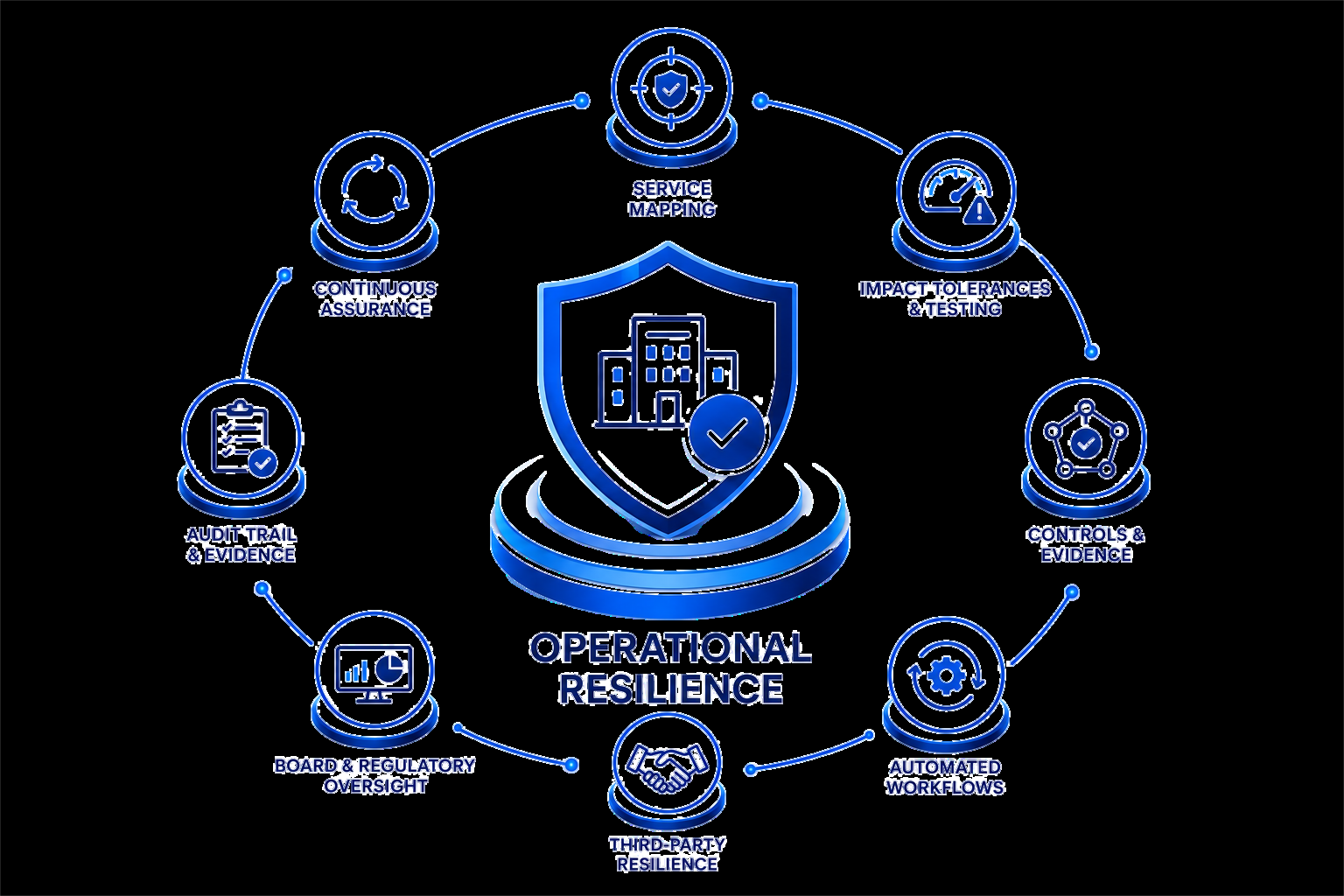
Ruleguard replaces static maps and disconnected documents with a continuously maintained resilience programme. Important business services, their dependencies, and their impact tolerances are held in one connected model; agents run the assessment and testing workflows, chase and escalate open actions, and keep the self-assessment and board MI current. Resilience requirements are linked to the controls, testing evidence, and remediation that satisfy them, so you can show, at any moment, whether the firm can stay within tolerance.

Important business service mapping
Maintain a structured, centralised view of your critical and important business services and the processes, people, systems, vendors, and controls behind each one. Agents keep the dependency map current as systems and suppliers change, so you always know what a given service actually relies on.

Impact tolerances & scenario testing
Set the maximum tolerable level of disruption for each important business service, then run scenario and stress testing against it. Test results, vulnerabilities, and whether the firm remained within tolerance are captured against the service and agents flag where tolerances are at risk as dependencies or test outcomes change.

Connected requirements, controls & evidence
Resilience obligations are linked to the policies, controls, risks, testing evidence, and remediation actions that satisfy them. Because it sits on the same platform as your risks, incidents, and monitoring, a new vulnerability or incident automatically informs the wider picture rather than living in a silo.

Automated resilience workflows
Replace spreadsheets and manual chasing with automated workflows: assigning service owners, issuing self-assessments and RCSAs, collecting attestations and evidence, escalating overdue actions, and tracking remediation to close -with agents handling distribution, reminders, and escalation so nothing slips.
Governance
Human-in-the-loop governance
Resilience decisions - approving impact tolerances, signing off the self-assessment, accepting or escalating vulnerabilities, demand the judgement of the accountable Senior Manager and the resilience committee. Ruleguard provides the data and the structure:

Full Review
Every impact tolerance, mapping change, and scenario test outcome reviewed by your resilience team before sign-off. Essential for the most critical business services.
Learn More

Exception-based
Routine attestations and unchanged dependencies processed automatically; only new vulnerabilities, tolerance breaches, and material changes escalated for attention.
Learn More

Autonomous
Assessment distribution, reminder and escalation chasing, evidence collation, and MI compilation handled by the platform.
Learn More
Built for Regulated Firms
Enterprise-grade compliance
Ruleguard is built to the standards financial regulators and auditors expect — not retrofitted to meet them.