Ok
logo_outline-1
Solutions > Operational Risk Management

Operational Risk Management

AI-powered, connected operational risk management. Operational risk management demands continuous identification, assessment, and monitoring of risks across your entire business — with clear control mappings, regular assessments, and transparent reporting to the board. Ruleguard provides a dynamic risk framework that stays current, connected, and audit-ready as your business evolves.
Operational Risk Management
TRUSTED BY LEADING FINANCIAL INSTITUTIONS
The Challenge

Operational risk management shouldn't live in spreadsheets

Regulators expect firms to maintain comprehensive risk registers, map controls to identified risks, conduct regular risk and control self-assessments, track loss events, and report risk exposure to senior management. The framework must be living and responsive, not a compliance artefact. Most firms still manage this through spreadsheet-based risk registers, manual RCSA processes, and disconnected reporting.
Component 1 (18)-Jun-22-2026-09-23-28-2743-AM

Static risk registers

risk data captured at a point in time and quickly becoming outdated as the business evolves
Learn More
Component 1 (18)-Jun-22-2026-09-23-28-2743-AM

Disconnected control mapping

controls documented separately from the risks they mitigate, making it hard to assess coverage and gaps
Learn More
Component 1 (18)-Jun-22-2026-09-23-28-2743-AM

Manual RCSA processes

risk and control self-assessments conducted through email and spreadsheets with limited standardisation
Learn More
Component 1 (18)-Jun-22-2026-09-23-28-2743-AM

Board reporting effort

translating risk register data into meaningful MI for senior management and the board
Learn More
The Solution

An intelligent, living risk framework, not a static register

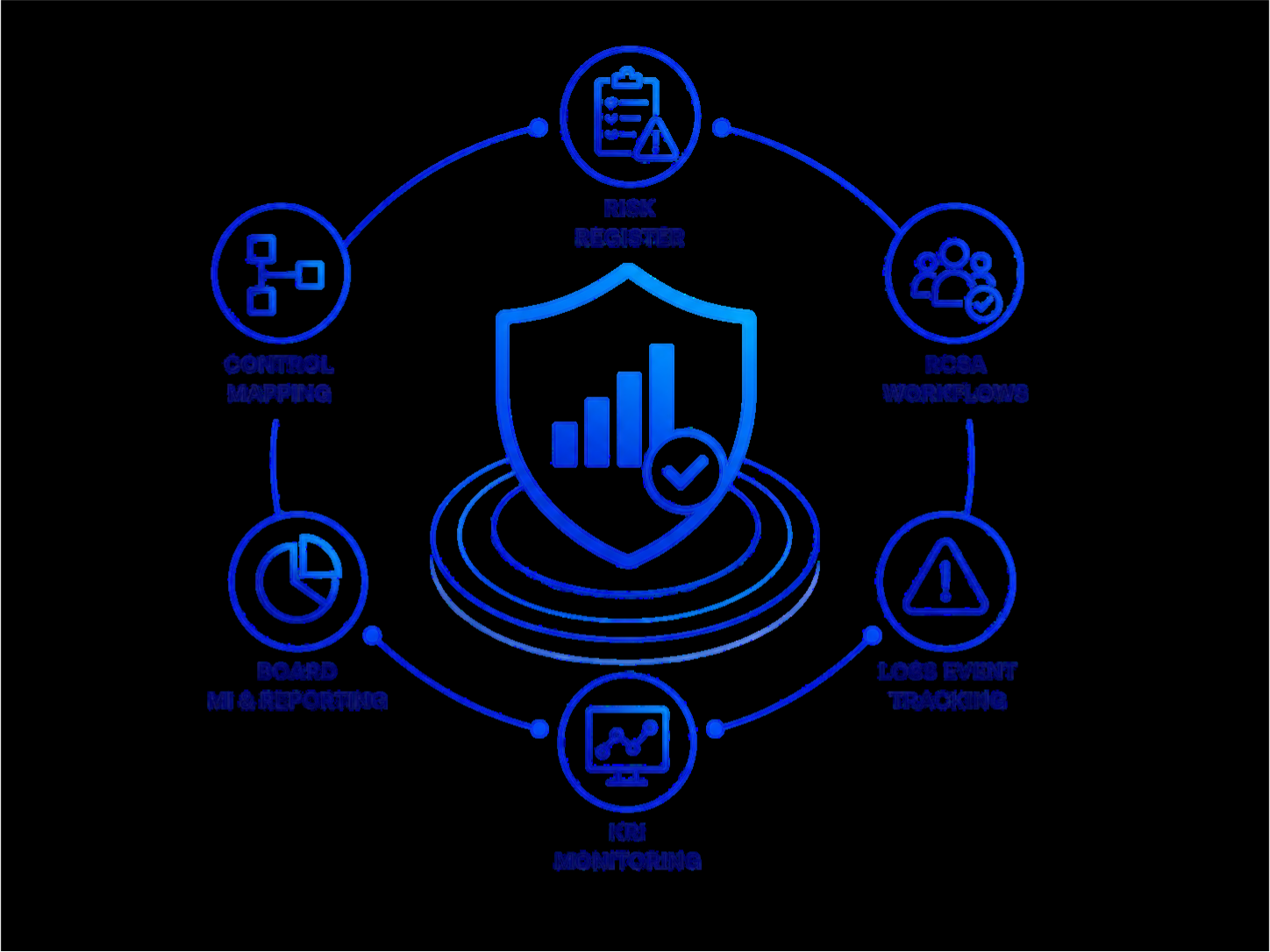
Ruleguard replaces static spreadsheet registers with a dynamic, connected risk framework. Risks are linked to controls, processes, and regulatory requirements — so when your business changes, the risk picture updates accordingly. RCSA workflows run through the platform, loss events are tracked and linked, and board MI is generated automatically from live data.
enterprise-grade-ai-value-icon

Dynamic risk register

A living risk register linked to controls, processes, and regulatory requirements. When your business changes or new risks emerge, the framework adapts — with drag-and-drop interfaces and matrix views that replace unwieldy spreadsheets.
human-expertise-ai-collaboration-icon

Control mapping and gap analysis

Controls are mapped to the risks they mitigate, with visual matrix views that make coverage gaps immediately apparent. Drag-and-drop interfaces let your risk team build and refine relationships intuitively.
secure-internal-data-hosting-icon

Automated RCSA workflows

Risk and control self-assessment cycles are orchestrated end-to-end — assessments distributed to risk owners, responses collected, and results compiled. Your risk function reviews and challenges the findings; the platform handles the logistics.
zero-cross-client-data-risk-icon

Risk MI and board reporting

Configurable dashboards surface risk exposure, control effectiveness, assessment status, and emerging themes. Board MI is generated from live data — no more manual report preparation or stale quarterly snapshots.
Governance

Human-in-the-loop governance

Risk assessment requires expert judgement — but the mechanics of gathering assessments and compiling results shouldn't consume that expertise. Ruleguard separates the analytical from the administrative:
Component 1 (18)-Jun-22-2026-09-23-28-2743-AM

Full Review

Every RCSA response and risk score reviewed by the risk function before it's recorded. Essential for newly identified risks or significant control changes.
Learn More
Component 1 (18)-Jun-22-2026-09-23-28-2743-AM

Exception-based

Routine reassessments of stable, well-understood risks accepted automatically; only material changes, new risks, or adverse indicators escalated.
Learn More
Component 1 (18)-Jun-22-2026-09-23-28-2743-AM

Autonomous

RCSA distribution, collection, reminder escalation, and MI compilation handled by the platform, with periodic oversight by the risk lead.
Learn More
Traceability

Complete audit trail

Every risk assessment, control mapping change, RCSA response, and loss event is logged with full timestamps, responsible parties, and supporting rationale. Your risk framework's entire evolution is documented — from initial risk identification through ongoing reassessment.
Why Ruleguard

Built for firms that can't afford to get it wrong

One platform, not a point solution

Operational risk connects to every compliance function — incidents feed the risk register, monitoring tests control effectiveness, and regulatory changes create new risks. On Ruleguard, these connections are live, creating a genuine risk management ecosystem rather than a collection of disconnected registers.

Four layers of context

Risk taxonomies, scoring methodologies, RCSA questionnaires, and reporting formats are configured to match your firm's specific risk management framework — ensuring the platform supports your methodology, not a generic one.

Certified and audited

ISO 27001 for information security. ISO 42001 for AI management systems. Multi-jurisdiction data residency. Built for the most demanding regulated environments.

Measurable impact

Move from static, spreadsheet-based risk management to a dynamic, connected framework. Reduce RCSA cycle times. Improve control coverage visibility — and give your board and risk committee real-time insight into your operational risk posture.
Capabilities

Operational Risk Management capabilities at a glance

Capability What agents do
Risk register Dynamic register with configurable risk taxonomy, scoring, and categorisation
Control mapping Link controls to risks with drag-and-drop matrix views and gap analysis
RCSA workflows Automated self-assessment distribution, collection, and results compilation
Loss event tracking Log and analyse operational losses linked to risks and control failures
Process mapping Document business processes and link them to risks and controls
KRI monitoring Track key risk indicators with threshold alerts and trend analysis
Board MI Configurable dashboards and risk reports for senior management and the board

Frequently Asked Questions

Your questions about Ruleguard, answered.
Regulators expect firms to maintain comprehensive risk registers, map controls to identified risks, conduct regular risk and control self-assessments (RCSA), track loss events, and report risk exposure to senior management.
An RCSA (risk and control self-assessment) is orchestrated end-to-end: assessments are distributed to risk owners, responses collected, and results compiled, while the risk function reviews and challenges the findings.
Controls are mapped to the risks they mitigate using drag-and-drop interfaces and matrix views that make coverage gaps immediately apparent.
Yes. Incidents feed the risk register, monitoring tests control effectiveness, and regulatory changes create new risks — with these connections kept live on Ruleguard.
Built for Regulated Firms

Enterprise-grade compliance

Ruleguard is built to the standards financial regulators and auditors expect — not retrofitted to meet them.

See it in action

Book a demo and discover how Ruleguard transforms operational risk management from a static compliance exercise into a dynamic, connected framework that delivers real insight to your board.